
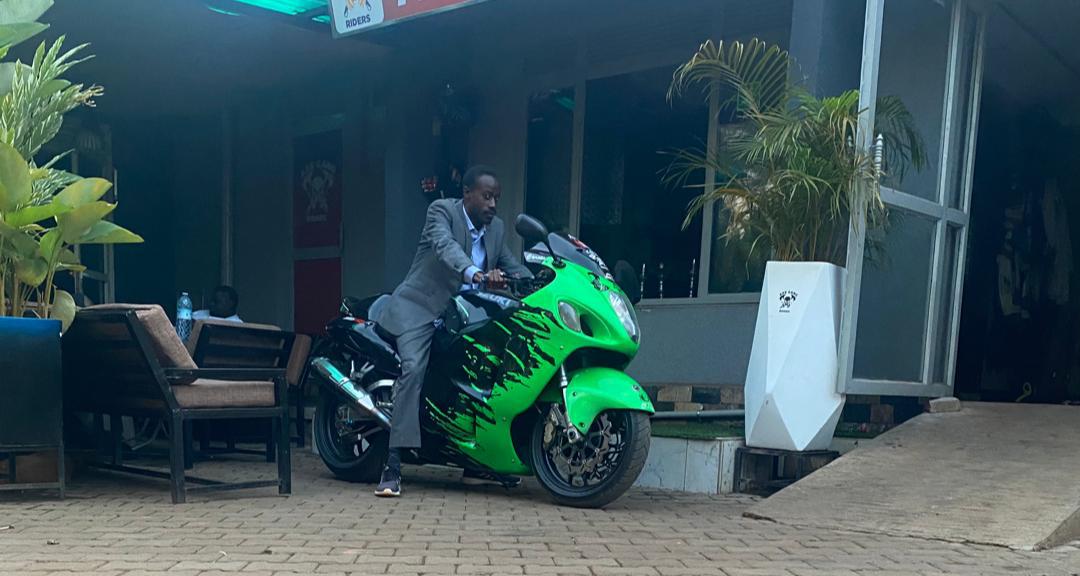
This year, I met a group of outstanding bikers, and an idea hit me: what if we merged mental health awareness with the world of superbikes?
The more time I spent around them, the more I realized how much mental stamina, emotional control, and inner balance it takes to ride a bike. It’s a whole psychological discipline on its own.
Many people limit mental health to counselling or therapy, but it’s far wider than that. It encompasses every field the mind, skill, aptitude, emotion, thrill, and pursuit touches. All things in the world are a reflection of things within us, in our souls. To reveal how they are mirrored and how it all connects is the end goal.
In recovery, the goal is always balance.
Think about how a superbike’s tyre meets the road, the intimacy between rubber and asphalt. When that connection is off, you skid. When it’s aligned, you glide. Thriving in life works the same way: applying the right amount of energy, wisdom, and awareness so nothing throws you off course.
That’s why I started exploring how the different parts of a superbike can represent key mental-health and recovery principles, plus concepts. Here are a few ways this idea can come to life: by correlating superbike components with powerful mental health concepts.
1. Clutch – Emotional Regulation:
Knowing where to increase or decrease the intensity of a particular emotion (gear) when a particular situation arises.
2. Protective Gear and Safety Checks – Healthy Boundaries:
Safeguards against toxicity, codependency, manipulation, or emotional injury.
3. Fuel Tank – Emotional and Spiritual Reserves:
Represents the store of motivation, drive, passion, focus, ambition, wisdom, inspired guidance, and blessing — the power to realize things.
4. Tires – Wisdom in Execution:
Where the engine’s power meets the road. Heated tires have steadier traction — inspired guidance/counsel (heat) makes for steadier decisions.
5. Brake – Prudence:
Knowing when to hit the brakes and when to release them while riding on an emotional or psychological terrain.
6. Shock Absorbers – Coping Mechanisms:
When life hits hard, what absorbs the shock mentally? Defensiveness or acceptance?
7. Chain – Flow of Inner Power:
Delivers energy from the engine to the rear tire. Mirrors how power flows from spirit to soul — for instance, how passion stirs emotions.
8. Side Mirrors – Reflection and Introspection:
Seeing what’s behind without turning back. Represents inventory, review, and learning from the past.
9. Hydraulic System – Strategic Wisdom:
Little exertion produces great force. Symbolizes SMART strategies and goal-setting that multiply effort.
10. Aerodynamics – Adaptability:
Breaking through resistance. Awareness of what’s against you psychologically and the agility to overcome it (depression, anxiety, discouragement).
11. Lubricant – Joy and Positive Emotion:
What makes smooth the running of the engine parts. Positive emotions make the soul run smoothly.
12. Coolant / Radiator / Air Vents – Conflict Resolution:
Healthy cooling systems when things get heated.
13. Seat – Mental Positioning:
The state of mind that affords control over the soul’s direction.
14. Four-Stroke Engine – Cycles of Insight:
Understanding cause, effect, and the repeating patterns that drive growth.
15. Tuning – Individual Awareness:
Recognition and refinement of one’s unique design and temperament.
16. Headlights – Vision and Leadership:
Direction, purpose, initiative — seeing what lies ahead.
17. Tail Lights / Indicators – Accountability and Communication:
Signals to followers and peers. Represents mentorship and transparency.
18. Idling – Stillness and Meditation:
Solitude, peace, and inner calm when not in motion.
19. ECU (Engine Control Unit) – Belief System:
The core control of values, ideals, and self-esteem — where the center holds.
20. Screws, Nuts, and Bolts – Mental Health Understanding:
The small but essential ties that hold the entire system together.
21. Kickstand – Rest and reflection:
The ability to pause without collapsing; grounding practices, journaling, Sabbath, or intentional rest that stabilizes the soul when not in motion.
22. Throttle – Emotional momentum:
Knowing when to lean forward into passion, urgency, or drive—and when to ease off to avoid burnout.
23. Exhaust Pipe – Emotional release:
Healthy expression—crying, venting, praying, creating art—to release internal pressure.
24. Horn – Assertiveness:
Speaking up, setting boundaries, asserting needs without aggression.
25. Speedometer – Self-awareness:
Tracking emotional pace, energy levels, and mental load to avoid overwhelm or stagnation.
26. Gearbox – Emotional versatility: adapting emotional responses to different terrains—grief, joy, confrontation, celebration.
Other Concepts To Build Upon:
1. In a traffic jam, a smaller bike (boda boda) can overtake a superbike, but a superbike is not intimidated. Wait on the freeway!
Depicts confidence and knowing who you are—self-actualization—not intimidated by others.
2. Swerving corners – Navigating various challenges in life or emotional triggers.
3. On the freeway – Managing or embracing breakthrough; a question of humility.
4. No fear, ready to bear the risk! – Understanding risk vs reward; risking oneself out of emotional comfort zones.
5. Stunting (for instance, wheelies) – Experiments with self that result in self-discovery.
6. Bikers Group – The power of community, support, and united passion.
7. Mechanics/Bike Fixing – Rising after a fall; resilience.
8. Progress made on a tour – Progress made on the journey of healing and growth.
When someone at home annoys you and you rush outside angry, and the ride pacifies you — that’s biking as an escape. But when you work through the conflict first, gain peace, and then carry that peace into your ride — that’s biking as therapy. In one instance, biking is a drug. In the other, biking is a discipline of peace.
Biking as an Escape vs Biking as Therapy:
Emotional State:
Biking as Escape: Reactionary, fleeing discomfort | Biking as Therapy: Responsive, carrying peace
Outcome:
Biking as Escape: Temporary relief | Biking as Therapy: Lasting transformation
Source of Peace:
Biking as Escape: External (the ride itself) | Biking as Therapy: Internal (resolved conflict)
Risk:
Biking as Escape: Avoidance of root issues | Biking as Therapy: Engagement with healing
Curriculum Angle:
Biking as Escape: Teaches awareness of coping mechanisms | Biking as Therapy: Teaches integration of healing into rhythm
This is what I thought of and we will build upon it.