
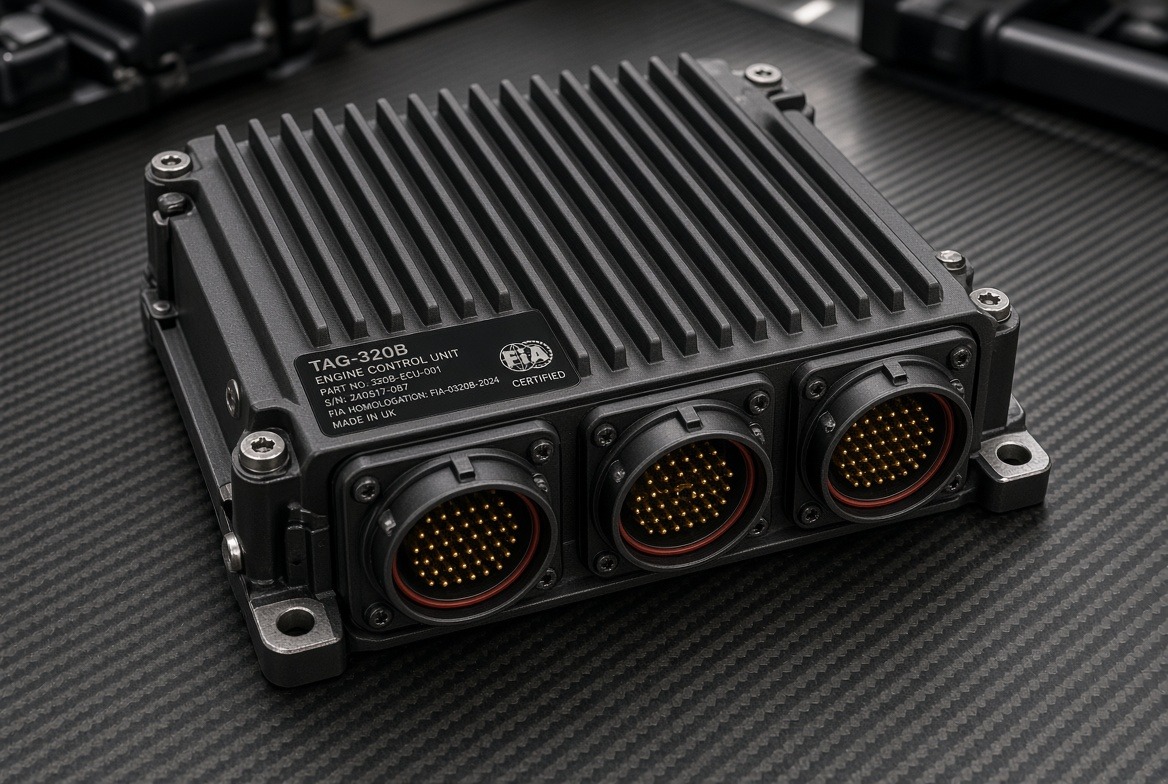
A small but remarkably important component, the Engine Control Unit (ECU) is the brain of a Formula One car. It is central to how the car operates, how power is managed, and how different systems work together. In mental health awareness, the ECU represents our belief system: the core values, ideals, and convictions that influence how we think, respond, make decisions, and navigate life.
The ECU does not generate the engine’s power. Instead, it manages how that power is delivered, when it is delivered, and how different systems operate together to maintain control and performance.
Every modern F1 car uses the same FIA-mandated Standard ECU, supplied by McLaren Applied. This standardization helps ensure that no team gains an unfair advantage through unauthorized electronic driver aids or control systems. Although teams work within the same regulated electronic framework, they can develop approved software configurations for their individual cars.
The ECU receives information from sensors throughout the car and manages critical functions involving the power unit, fuel system, transmission, brakes, and other systems. It processes information and coordinates responses to help the car operate safely and efficiently.
This is why the ECU matters so much. A powerful engine alone does not guarantee a well-performing F1 car. The way its systems are controlled and coordinated makes a significant difference.
A well-managed system delivers smooth, predictable power, stability under pressure, and confidence for the driver. Poorly managed systems can contribute to unpredictable responses, loss of control, and compromised performance.
The engine may be powerful, but without effective control, that power can become difficult to manage.
In mental health awareness, the ECU represents our belief system.
Our belief system is central to the journey of self-improvement and emotional healing. It influences how we interpret experiences, respond to challenges, understand ourselves, and relate to other people.
Without healthy beliefs and values guiding us, we can experience emotional equivalents of jerky throttle responses, inconsistent progress, power surges in the form of mood swings, stalling through discouragement and boredom, and overheating through unresolved or flared-up emotions.
We may have the desire to change, the willingness to grow, and the resources to make progress, but our underlying beliefs can still work against us.
Most of us were conditioned under punitive belief systems, where doing something wrong meant being punished by God. We learned to associate mistakes with condemnation rather than correction, and guilt with rejection rather than an opportunity to grow.
This conditioning can keep us trapped in cycles of fear, shame, self-condemnation, and emotional instability. We struggle to move forward because the very beliefs through which we interpret life keep pulling us backward.
A belief system filtered through love means encountering God as Love and understanding that His intentions toward us are good. It allows us to recognize that correction does not have to mean rejection and that we can grow without living in constant fear of punishment.
A belief system filtered through mercy recognizes that a merciful God does not treat us according to what we deserve. Many of us would not be where we are today if it were not for God’s mercy.
A belief system filtered through forgiveness understands the importance of extending forgiveness to others and ourselves. God’s forgiveness gives us the opportunity to acknowledge our mistakes, repent, make amends, and move forward without remaining imprisoned by our past.
With an ECU tuned this way, our belief system becomes a source of stability through the bumps, challenges, and rough places of healing and personal growth.
Just as the FIA establishes a common electronic framework for every F1 team, we also need sound principles that guide how we manage our lives. Love, mercy, forgiveness, honesty, humility, and accountability provide a foundation upon which healthy decisions can be made.
The important thing is not simply having power, resources, or the desire to move forward. It is having the right internal framework to manage them.
Is your ECU tuned well?
F1 And Mental Health.