
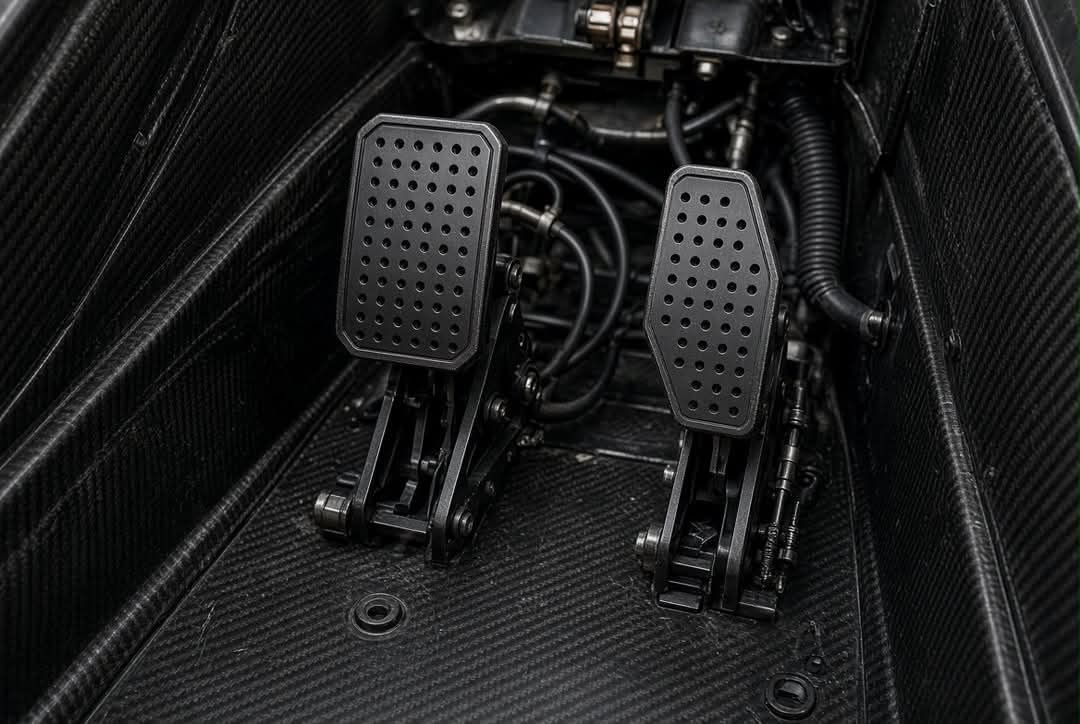
An F1 car’s braking system is one of its most critical safety and performance systems. It allows the driver to manage immense speed with precision, especially when approaching tight corners, braking zones, and other cars on the track.
At high speeds, tiny inputs matter. The driver must know when to brake, how much pressure to apply, and how to regulate speed without losing control of the car. The braking system translates the driver’s input into the stopping force needed to navigate the track safely and effectively.
An F1 car needs more than an immensely powerful engine. It needs a braking system capable of controlling that power.
Healing and growth, sobriety and recovery need brakes too.
So, what does an F1 car’s braking system relate to in mental health awareness?
It relates to managing triggers with precision. It relates to the skills, habits, and support systems we develop to regulate our emotions and respond wisely when life puts us under pressure.
We encounter situations in our healing and growth that place intense pressure on our emotions. Without the necessary skills and support, we might react destructively, relapse, or escape into unhealthy coping mechanisms.
Maybe an ex you broke up with badly shows up.
Maybe an old drinking buddy gives you a call.
Maybe a parent unintentionally says something that triggers you.
In these moments, we need our brakes in place.
So, what are some of the braking mechanisms a person committed to healing and growth can engage to manage a trigger with precision, in a healthy way, without crashing, relapsing, or escaping?
1. Confiding in another, or praying from the heart if there is no one to reach out to.
In F1, braking depends on a system of components working together to turn the driver’s input into controlled deceleration. In healing, reaching out to a trusted confidant can help us interrupt destructive reactions and regain perspective. Prayer can also provide an opportunity to surrender our burdens to God, seek wisdom, and find strength to respond rather than react.
Sometimes, the small act of making a call or saying an honest prayer can make a tremendous difference in an intense moment.
2. Nurturing solitude, prayer, and meditation.
An F1 car requires a properly maintained braking system to perform reliably when the driver needs it most. Similarly, we need to nurture the habits that support our emotional and spiritual well-being before a difficult situation arises.
Solitude, prayer, and meditation help us become more self-aware, reflect on our responses, and cultivate the discipline needed to navigate challenging moments.
We cannot always predict when a trigger will appear, but we can prepare ourselves to meet it.
3. A humility to be mentored.
F1 drivers work with engineers and other specialists who help them understand the car, assess performance, and make better decisions on the track.
In healing and growth, mentorship gives us access to the wisdom and experience of others. A mentor can help us recognize warning signs, anticipate difficult situations, and develop healthier ways to respond.
Sometimes, a small adjustment in our thinking can prevent a major crash in our lives.
Humility allows us to recognize that we do not have to figure everything out alone.
These are some of the braking mechanisms we can develop in healing and growth.
In F1, speed without control is dangerous. In life, strong emotions without healthy ways of managing them can lead us into destructive patterns.
The goal is not to avoid every difficult corner. It is to develop the skills, discipline, wisdom, and support needed to navigate those corners without losing control.
Are your brakes in place?
F1 And Mental Health.