
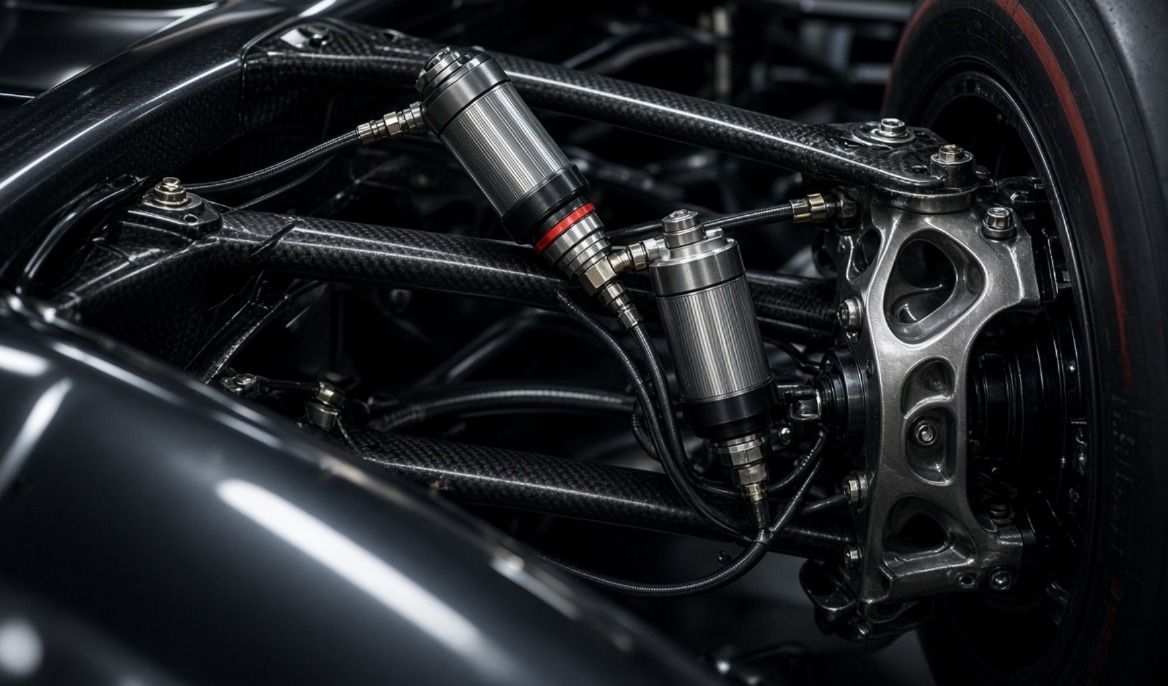
F1 cars have dampers that control the movement of the suspension as it responds to bumps, impacts, and changes in the track surface. They help prevent excessive bouncing, maintain tire contact with the track, and keep the car stable and responsive, especially under braking, cornering, and acceleration.
Without effective damping, a car can continue bouncing after hitting a bump, compromising tire contact, traction, and control.
Enter coping mechanisms: our mental and emotional dampers.
Coping mechanisms are thoughts and behaviours we use to manage stressful, difficult, or overwhelming emotions and situations. They can be healthy or unhealthy.
My coping mechanism in the past was drinking. When I felt nervous and insecure around people, I would drink to fit in. Drinking seemed to dampen the emotional shock of not feeling like I belonged.
When I lacked confidence talking to women, I would drink to overcome that insecurity. Drinking seemed to dampen the emotional and mental impact of low self-esteem.
Rebellion was another way I coped. I rebelled against authority to the point of being expelled from school. Rebellion helped me dampen the frustration of not feeling heard.
In healing, I have embraced healthy coping mechanisms that help me regulate intense emotional and mental responses. My journey has had its share of bumps and extremely uneven roads, but the healthy coping mechanisms available to me helped me stay on course, even when life was moving very fast.
One example was getting engaged. I wasn’t ready for it, and we eventually separated in a painful way. The impact was heavy, but the healthy coping mechanisms I had developed helped me process the pain without relapsing.
Life is full of bumps, uneven paths, and unexpected events that can shake us. Learning to regulate our responses is essential to maintaining stability and moving forward.
Hope helps us see beyond the bump. Honesty helps us acknowledge what we are experiencing. Humility helps us accept that we need guidance and support.
These are some of the qualities that help us manage life’s hardest shocks without losing our grip.
In F1, springs support the car and respond to track irregularities, while dampers control the resulting suspension movement. Together, they help the car maintain stability and tire contact with the track.
In healing, healthy coping mechanisms help us regulate our emotional responses so that life’s bumps do not keep throwing us off course.
F1 And Mental Health.