
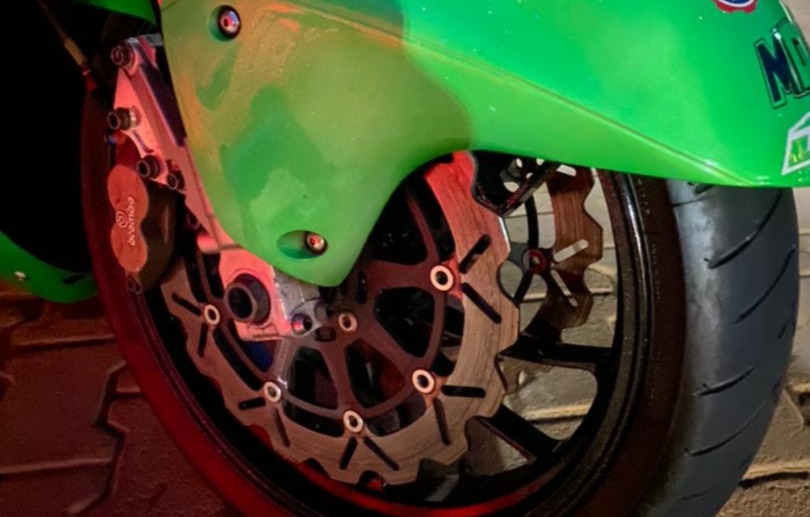
There are situations that arise where one has to hit the brakes when riding a bike; whether to slow down in an emergency, when entering areas that require reduced speed, when approaching traffic, navigating unfamiliar terrain, riding in poor weather, or when cornering and needing stability through the turn. At times, braking is about safety; at other times, it is about control, precision, and awareness of the environment you are in.
In life, we also have to hit the brakes when we encounter certain situations; either in emergencies, or when we are taking a corner and changing the course of our direction in decision-making, or even when a situation has nothing to do with us personally but still calls for restraint, pause, and discernment.
That is where wisdom and prudence come in. Life has many turns and corners, many moments where acceleration is dangerous and restraint is necessary. Knowing when to slow down is just as important as knowing when to move forward.
We live in a time where many of us are recipients of generational trauma, and much of the advice we receive from others comes from places of unresolved hurt, pain, or bias rooted in personal experience. When such advice is not filtered through the ideals of love, forgiveness, and self-awareness, we end up hitting the brakes too hard, and just like on a bike, abrupt braking without balance can throw us off.
I followed this kind of advice, and the climax of it was my separation from Ann. People told me many different things, but no one ever pointed out that my greatest issue was a self-esteem issue. Taking that turn with wisdom, slowing down through reflection instead of reacting, would have saved me.
In a generation with limited wisdom around mental health awareness, we often fall from braking too harshly, and our emotions end up bruised. We mistake reaction for wisdom and urgency for truth.
At other times, while moving fast, we enter spaces that call for slowing down, but we forget to hit the brakes and end up with parking tickets. These spaces include navigating healing with family members, letting people into our inner circles too quickly, investing emotionally, or in some cases financially, with people we barely know. The parking tickets are the fines life places on our hearts: guilt, regret, betrayal, and disappointment.
To ride safely, one has to hit the brakes when it calls for it; sometimes abruptly in emergency situations, and sometimes gently over time. There are also moments when one must rely on engine braking, especially when moving fast. This requires skill, experience, and awareness.
Engine braking, in life, can represent transmuting the very motivations and inspirations that caused us to speed up in the first place, using them to slow ourselves down instead – reverse thrust in airplane terms. This calls for emotional maturity, psychological skill, and inner discipline – excellent emotional and psychological skills.
To ride well, you have to know when to hit the brakes, and how to do it.